Omaha poker looks like Texas Hold'em. Same table, same community cards, same hand rankings. But there's one rule that changes everything about how the game plays, and getting it wrong is the single most common mistake new Omaha players make.
You get four hole cards instead of two. And you must use exactly two of them - no more, no less - combined with exactly three cards from the board to make your final five-card hand.
That's the whole game right there. The rest of this guide unpacks what that rule actually means in practice, because it has consequences that aren't obvious until you've seen them.
The Rule That Changes Everything: Exactly 2 + 3
Experienced Hold'em players get this wrong all the time.
In Omaha, your final five-card hand must be built from:
- Exactly 2 of your 4 hole cards
- Exactly 3 of the 5 community cards
You cannot use one hole card and four from the board. You cannot use three hole cards and two from the board. It's always 2 + 3. Always.
Here's where it trips people up. Say you're holding A♠ K♠ 7♠ 2♣, and the board shows Q♠ J♠ 9♦ 4♥ 3♦. You've got three spades in your hand and two spades on the board. Five spades total - that's a flush, right?

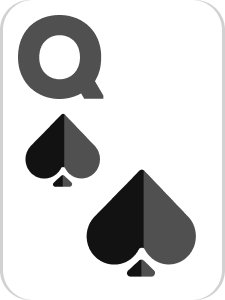
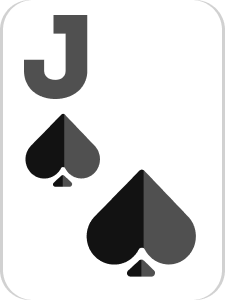
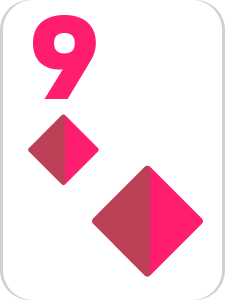
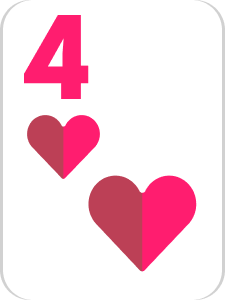
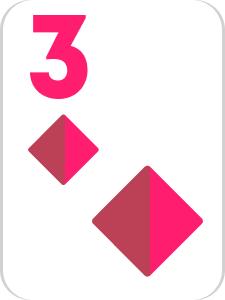
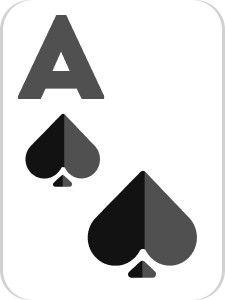
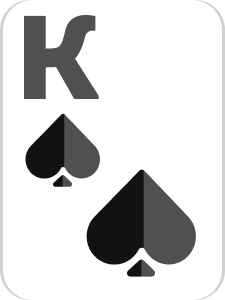
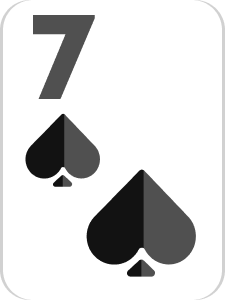
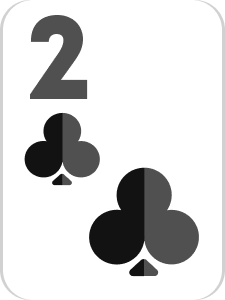
Not in Omaha. You can only use two cards from your hand, so the most spades you can contribute is two (A♠ K♠). And since the board only has two spades (Q♠ J♠), your three board cards would be Q♠, J♠, and one non-spade. That gives you four spades, not five. No flush.
This exact situation burns beginners constantly. Three suited cards in your hand feels like you're close to a flush. You're not. You need at least three of your suit on the board, because you can only contribute two cards from your hand.
If you play on an app, the software handles this automatically. You'll never accidentally play an illegal hand. But knowing why the rule works the way it does will make you a much better player.
How a Hand Plays Out
If you know Texas Hold'em, the structure of an Omaha hand will look familiar. The blinds, the button, the betting rounds - all the same. The difference is your starting hand and how you build your final hand.
The Deal
Each player gets four cards face down. Only you see your cards.
Four cards means six possible two-card combinations from your hand alone (pick any two of your four cards - there are six ways to do that). That's three times as many starting combinations as Hold'em. More combinations means more possibilities, which means more difficult decisions - but also more action and bigger pots.
Preflop Betting
The first round of betting happens before any community cards appear. This round is called preflop.
The player left of the big blind acts first. Options are fold, call, or raise - same as Hold'em. The big blind acts last, with the option to check if nobody raised.
Four cards make almost every starting hand look promising. This is a trap. More on that in the mistakes section.
The Flop
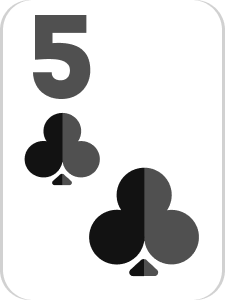
Three community cards are dealt face-up. This is the flop.
Now you're looking at your four hole cards and three board cards, trying to figure out which two-card combination from your hand works best with three cards from the board. A second betting round follows.
The Turn
A fourth community card is dealt. This is the turn. Another betting round follows.
The River
The fifth and final community card. This is the river. One last betting round.
Showdown
If two or more players are still in the hand after the river betting, it's showdown time. Every remaining player reveals their cards, and the best five-card hand wins the pot - built from exactly two hole cards and exactly three board cards.
If everyone else folded at any point, the last player standing takes the pot without showing their cards.
Omaha Is Almost Always Pot-Limit
Here's something Hold'em players don't expect: Omaha is almost always played as Pot-Limit (abbreviated PLO, for Pot-Limit Omaha). That means the maximum you can bet or raise is the size of the current pot.
In No-Limit Hold'em, you can shove all-in for your entire stack at any time. In PLO, your maximum bet is capped by the pot size. The pot still gets big - especially in Omaha where players tend to build hands and call more - but the betting structure prevents the instant all-in moves you see in Hold'em.
You don't need to calculate pot-sized bets yourself. Your poker app handles it automatically. Just know that when someone says "Omaha," they almost always mean Pot-Limit Omaha.
Hand Strength Works Differently in Omaha
Omaha uses the same hand rankings as Hold'em. A flush beats a straight, a full house beats a flush, and so on. Nothing changes there.
What changes is how strong you need to be to win.
In Hold'em, a pair of Kings is a good hand. In Omaha, a single pair at showdown is almost always a loser. Everyone has four hole cards, which means everyone has more combinations to work with. Straights, flushes, and full houses show up far more often. If you're not holding a strong hand by the river, someone else probably is.
This has a practical consequence: the nuts matters more in Omaha. The nuts is the best possible hand given the current board. In Hold'em, having the second-best flush is usually fine. In Omaha, the second-best flush regularly loses to the best flush, because with four hole cards, someone is more likely to hold the nut cards. Chasing non-nut hands is one of the most expensive habits in Omaha.
Omaha vs Texas Hold'em
If you already play Hold'em, here's what stays the same and what doesn't.
Same in both games:
- Hand rankings (flush beats straight, etc.)
- Betting rounds: preflop, flop, turn, river
- Blinds and button structure
- The goal: best five-card hand or get everyone to fold
Different in Omaha:
- 4 hole cards instead of 2
- You must use exactly 2 hole cards and exactly 3 board cards (in Hold'em, you can use any combination)
- Pot-Limit betting instead of No-Limit
- Stronger hands are needed to win at showdown
- The nuts matters much more
- Single pairs and two pairs rarely win
The hard part isn't learning new rules - it's unlearning Hold'em instincts. Hands that feel strong in Hold'em are often mediocre in Omaha.
For a refresher on Hold'em rules, see the Texas Hold'em beginner guide.
Concrete Example: Walking Through a Hand
Here's a full hand to show how the 2+3 rule works in practice.
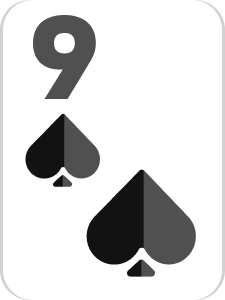
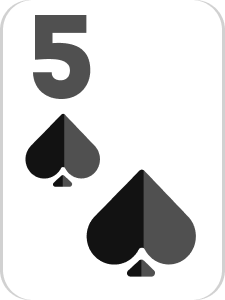
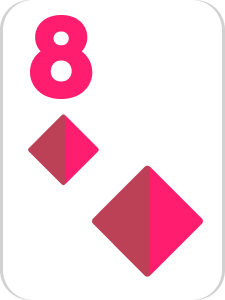
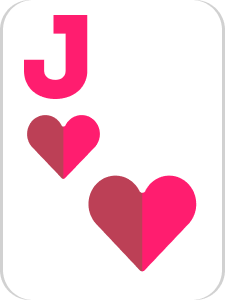
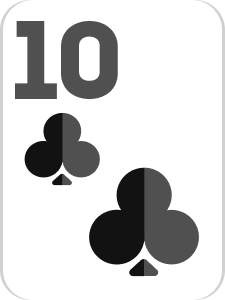
Your hole cards: K♠ Q♠ J♥ 10♣
The board after all five cards: A♠ 9♠ 5♠ 8♦ 2♣
Look at what you might think you have versus what you actually have.
What it looks like: You've got K♠ and Q♠ in your hand, and there are three spades on the board (A♠ 9♠ 5♠). That's a flush - K♠ Q♠ from your hand plus A♠ 9♠ 5♠ from the board. And it's a strong one, Ace-high. This time the 2+3 rule works in your favor: exactly two hole cards, exactly three board cards.
Could you also have a straight? You're holding K-Q-J-10, and the board has A and 9. In Hold'em, you'd have an Ace-high straight (A-K-Q-J-10) using four of your cards and one from the board. In Omaha, that's illegal - you can only use two cards from your hand. So you have to check each two-card combination:
- K♠ Q♠ from your hand + A, 9, 8 from the board = K, Q, A, 9, 8. No straight.
- K♠ J♥ from your hand + A, 9, 8 from the board = K, J, A, 9, 8. No straight.
- J♥ 10♣ from your hand + A, 9, 8 from the board = J, 10, 9, 8, A. J through 8 are four in a row, but the A doesn't connect - there's a gap between A and J. No five-card straight.
Despite holding four cards to a Broadway straight, no two-card combination from your hand produces a straight with this board.
Your actual best hand: The A-high flush using K♠ Q♠ + A♠ 9♠ 5♠. That's a great hand. The point is that even with four excellent-looking cards, you always have to check which two-card combinations are legal, and which three board cards go with them.
Common Beginner Mistakes
The 2+3 rule is the biggest source of errors, and it's covered in detail above. Here are the less obvious traps.
The Four Aces Trap
This surprises everyone. You get dealt A♠ A♥ A♦ A♣. Four aces! That looks incredible.
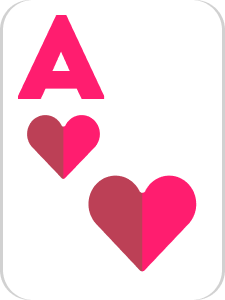
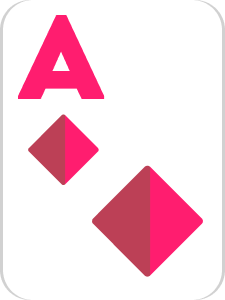
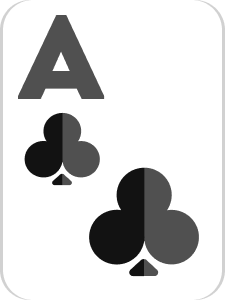
It's actually a terrible hand. You can only use two of those aces, so you've got a pair of aces and nothing else. The other two sit in your hand doing nothing, and since you're holding them, they can't show up on the board either. You've blocked yourself from making trips or quads. In Omaha, you want all four of your cards working together, not duplicating each other.
Playing Too Many Hands
Four cards make everything look playable. You'll see straight possibilities, flush possibilities, pairs - your hand looks full of potential. But four cards don't mean more good hands. They mean more combinations, and most of those combinations are junk.
The best Omaha starting hands have all four cards working together.
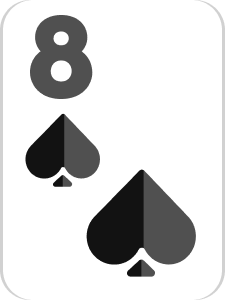
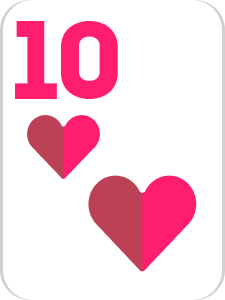
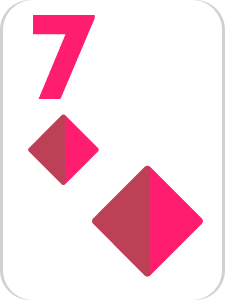
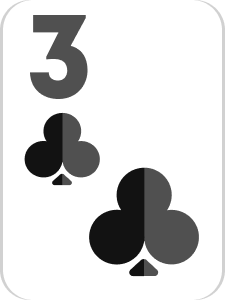
A hand like 8♠ 9♠ 10♥ J♥ is strong because every card connects with the others - straight draws in multiple directions, two suited combinations for possible flush draws. A hand like A♠ A♥ 7♦ 3♣ looks good because of the aces, but the 7 and 3 are "danglers" - cards that don't connect with anything. They're dead weight.
Two Pair Is Rarely Enough
In Hold'em, two pair is a hand you're happy to take to showdown. In Omaha, two pair loses far more often than you'd expect. With everyone holding four cards, somebody at the table is likely sitting on a straight, flush, or full house. If the board has straight or flush possibilities and you're holding two pair, proceed with caution.
Ignoring the Nuts
You make a flush with 8♠ 5♠. The board has three spades. Feels great - until someone turns over A♠ J♠ and has a bigger flush. In Omaha, non-nut flushes and non-nut straights lose far more often than in Hold'em. When you don't have the nuts and there's heavy betting, be cautious.
A Note on Omaha Hi-Lo
You might see references to "Omaha Hi-Lo" or "Omaha 8 or Better." That's a different game. In Hi-Lo, the pot is split between the best high hand and the best low hand. It's a separate variant with its own rules and strategy.
This guide covers standard Omaha (also called "Omaha High"), which is the most common version.
What You Don't Need to Learn Yet
You can start playing Omaha right now without knowing any of this:
- Starting hand charts - Play tight, avoid danglers, and you're fine for now.
- Pot odds and equity math - This comes later once you're comfortable with the flow of the game.
- Wraps and combo draws - Advanced draw concepts. Ignore them.
- Omaha Hi-Lo rules - Different game entirely. Save it for later.
The only thing you need right now is the 2+3 rule and the basics of how the betting rounds work. Play some hands, watch how the software selects your best hand at showdown, and let the pattern sink in.
Next Steps
Once you're comfortable with how Omaha works, these are useful places to go:
- Poker Hand Rankings Explained (With Chart) - Same rankings as Hold'em, but worth reviewing since stronger hands appear more often in Omaha
- Texas Hold'em Rules for Beginners - If you need a refresher on the shared foundations
Ready to Try Omaha?
The best way to learn Omaha is by playing it. Poker apps handle the 2+3 rule automatically - the software picks the best legal hand from your cards, so you'll never accidentally play a hand wrong. Each hand you play reinforces how the rule works without any pressure.
Play Omaha poker free in the app and learn as you play.
Poker is a game of skill and chance. Play for fun, set limits you're comfortable with, and never wager more than you can afford to lose.